

Monoup News Digest: Main Updates from Fintech Industry
Friday’s digest is live, and this week has been packed with news from the crypto industry, both good and not so good. Record-breaking hack of the Binance exchange, at more than $6 billion, shook not only the crypto market (BTC and ETH prices reacted sharply to the event) but the entire fintech sector. Suspected North Korean hacker group managed to make off with half of the funds literally within the first 20 minutes after gaining access to the “right device.”
Meanwhile, other crypto exchanges are navigating uncertainty, trying to protect themselves from regulatory and market risks. The parent company of Kraken exchange has decided to buy an active Lithuanian bank in order to provide lending services through it. If approved, such a deal would be the first in the history of European market.
We cover this and more below.
Kraken Buys a European Bank
Payward, parent company of crypto exchange Kraken, has signed an agreement to acquire Lithuania’s Saldo Bank together with its Finnish holding company, and as early as 2027 the exchange’s customers in Europe will gain access to full-fledged banking services, from interest on balances to loans and their own cards. The purchase price has not been officially disclosed, but Saldo Bank’s assets are considerable: it holds a license in Lithuania and, through passporting, operates in Germany, Finland, the Netherlands and Sweden, which means Kraken immediately gains access to five EU markets.
Saldo Bank accepts deposits in all five countries, issues consumer loans and small business loans, is developing a credit card business in Finland and provides lending infrastructure to fintech companies. On this foundation, Payward plans to launch banking services for partners, including its own card issuing. The deal continues a strategy the company has been building for several years: in the EU, Kraken currently operates under an EMI license issued by the Central Bank of Ireland, and in the US, it has applied for a national trust bank charter.
For a crypto company, owning a bank offers opportunities that were previously out of reach; moreover, many traditional banks were in no hurry to work with exchanges in the past (not to mention offering individual services or card programs). From this perspective, acquiring its own asset is more advantageous, but this path has its price, because regulatory risks and costs come with the license, and even after the deal Saldo Bank will remain a European bank required to comply with banking standards that are far stricter than the requirements for an electronic money institution.
Binance Suffers the Largest Hack in History
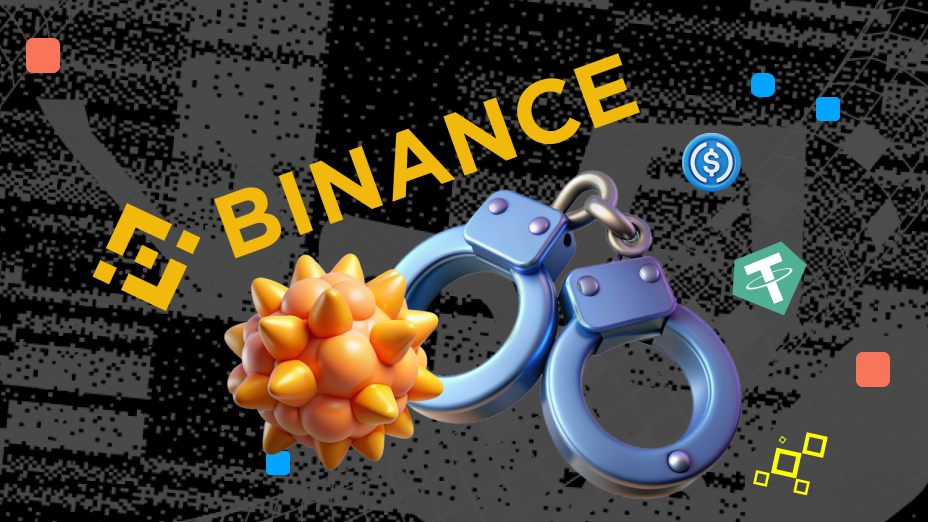
On the night of October 30, Binance fell victim to a hacker attack: according to the exchange’s own estimate, attackers managed to withdraw about $6.3 billion, while Chainalysis estimates the damage at roughly $5.9 billion. Either way, this is almost four times the size of last year’s $1.5 billion Bybit hack, which had been considered the record until now and which was linked to North Korean hackers at the time. Who is behind the attack on Binance has not yet been established, but suspicion once again falls on North Korea.
About half of the stolen funds have already been frozen, and stablecoin issuers played the key role here: Tether blocked about 1.57 billion USDT, Circle more than 800 million USDC, and another portion of the funds was stopped on the Arbitrum network. The ability to freeze funds, which is often criticized in the industry as contrary to the idea of decentralization, this time worked in favor of the victims, illustrating why regulated stablecoins are of interest to major players.
As the exchange reported on X, according to preliminary data, it all started with a compromised laptop belonging to one of its DevOps engineers. Through it, the attackers gained access to a “service container,” an internal service through which customer withdrawals are processed, and sent unauthorized transactions on behalf of the exchange from the hot wallet used for withdrawals. At the same time, the private keys were not leaked, as the attack targeted not wallets themselves but internal infrastructure around them.
The market reacted instantly: BTC briefly lost almost 5%, ETH about 6%, and BNB, the exchange’s own token, almost 10%. The exchange promises to fully cover user losses from its SAFU insurance fund and the company’s own funds, and to publish a detailed technical breakdown and an updated proof of reserves once the investigation is complete.
KuCoin Exits Russia and Belarus
KuCoin has announced that it is ending services for users from Russia and Belarus, citing compliance with regulatory requirements. The restrictions take effect immediately and apply to all of the platform’s products, and users will receive individual notifications with deadlines by which they must close their positions and withdraw their funds.
The decision is a marked departure from the exchange’s previous stance: in spring 2022, KuCoin’s head stated that the company would not freeze Russian users’ accounts without a request from a regulator. Since then, pressure on crypto exchanges has only intensified: in 2023, Binance left Russia, selling its local business, and in July 2026 the EU imposed sanctions on the A7 crypto network.
KuCoin, which has about 45 million users worldwide, has become the fourth major exchange to leave these markets this October, after Bitget, HTX and MEXC. Analysts link this wave of exits to the rising cost of compliance and the risk of secondary sanctions: working with these markets could cost exchanges their access to Western banks and partners, which these markets most likely do not justify.
These are the crypto news stories of the week! Despite growing pressure from regulators, real risk of losing funds and rising cost of operations crypto projects continue to develop, and Monoup keeps track of key milestones of this development on pages of Mono Talks media.