






Monoup news digest: main updates from fintech industry
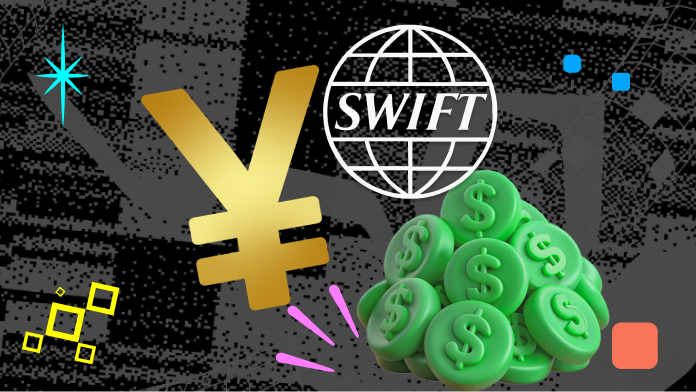
Friday is here again with news digest from Monoup. Chinese development of new payment system for fast international transfers has already stirred global interest. CIPS 2.0 has impressed with its speed and convenience in conducting transactions. Let's delve into more details about this new SWIFT competitor below.
Additionally, during SIGMA Americas conference in Brazil, payment issues were discussed (as always), and we heard an interesting discussion among payment systems: will gaming industry adopt open finance solutions?
Let's explore what happened this week in fintech and iGaming, and what you need to know.
Crypto exchanges aim to become banks
Inspired by Trump's loyal policies, crypto companies are optimistic about their future in the USA. Some major players have decided not to wait for signals from above but to develop in the direction of banking. For example, Circle (issuer of USDC) and BitGO have openly expressed their interest in obtaining banking licenses. Coinbase and Paxos also consider this step logical. The latter has already received preliminary approval.
Crypto companies believe that banking licenses will allow them to reach a broader customer base and cover all financial needs. This will create significant competition for traditional banks in the country, especially considering their low level of digital literacy and inconvenient use. Old-style banks do not offer flexibility and online financial management that neobanks and crypto services can provide, so the competition will be noticeable.
Although many traditional banks have already realized that crypto is here to stay and have also started investing in this direction, it is quite possible that more technologically advanced crypto firms will adapt faster to the new reality. Who will users choose? A crypto firm that has recently become a bank, or a reliable bank offering crypto services as an addition?
CIPS 2.0 aims to overtake SWIFT
The new international payment technology based on the digital yuan, CIPS 2.0, is already operational in 16 countries in Asia and the Middle East. Everyone was impressed by the first transaction in the system, a 120-million-yuan payment for auto parts, which was completed from Shenzhen to Kuala Lumpur in 7.2 seconds. The new Chinese payment system promises instant settlements and fast payments, even without internet access, while SWIFT processes payments over several days.
The relevance of SWIFT system for global banking has long been questioned by various specialists, as its speed and convenience do not match modern pace of life. Moreover, the system is clearly imperfect, as many users note that payments often get lost or take longer than expected. In the normal course for SWIFT, transaction processing times range from 3 to 10 business days.
Many believe that CIPS 2.0 will change global economy, and at the very least, part of the world will forever forget about SWIFT and US dollar. However, it is important to note that although these two systems are compared because they serve the same need, they operate entirely differently. CIPS independently processes payments and settlements, while SWIFT only provides a way to exchange messages. The entire SWIFT procedure involves allowing banks to communicate with each other through standard messages within a single system; payments are made between different banks on business days, which is why the process takes so long.
In other words, SWIFT is not a payment operator or system but an infrastructure for exchanging messages. On the other hand, CIPS 2.0 is a direct participant in transactions and can perform clearing. Therefore, it cannot be said that CIPS improves processes; instead, it offers an entirely new way of processing. This approach will undoubtedly be positively received by many countries that do not cooperate with or do not want to rely on collective Western technologies.
PIX 1-Click for the iGaming industry
OneKey Payments, a licensed payment provider in Brazil, has expressed its view on developing payment structure for betting and gaming operators. A representative of the payment system believes that open finance should be used, and PIX one-click payment through biometrics should be implemented for iGaming operators. This idea was discussed at the recent SIGMA Americas conference in Brazil.
It is worth noting that PIX payment method based on biometric verification is already being implemented in e-commerce in the country, and iGaming, being a significant part of online business, can also benefit greatly from this. Payment can be completed in a single scan of the face or finger, without need to open a banking app or copy codes, as is currently done. This reduces transaction time from 2 minutes to less than 10 seconds, increases approval rates, and reduces the steps users need to take, as they often do not want to fill out forms.
Such cooperation between iGaming industry and payment systems exists not only in Brazil, but there it shows the best results. The licensing of gambling has allowed the industry to come out of the shadows and develop perspective solutions that will generate new revenues. In this regard, Brazil is among the first to adopt open finance technology, and Europeans may follow their example.
Era of big banking in Kenya
Kenya has lifted a 10-year ban on issuing new banking licenses. Starting July 1, applications for new licenses will be again accepted.
However, applicants will need to provide authorized capital 10 times greater than previously required. The minimum capital for new banks must be at least 77 million dollars; previously, this requirement was at the level of 7.7 million dollars. The new rules aim to reduce the number of small, unstable banks that cannot afford to operate and be resilient.
This decision was influenced by the closure of several banks in the country over the past 10 years since 2015, as well as the initial collapse of significant banks in the country, Dubai Bank and Imperial Bank. Thus, it will now be much more difficult to establish a new bank in Kenya, and authorities believe this will guarantee that only stable and well-funded banks will enter the market.
These are major updates Monoup has gathered for you this week. Find more useful materials in other sections of Mono Talks, and also in our Telegram channel every day.


