






Brazil Nu Bank broadens up service list to crypto exchange
Nu bank is one of the most popular banking applications in Latin America, particularly in Brazil, however, it also holds a significant market share in Mexico, Colombia, and Argentina. There, it competes with Mercado Pago and Ualá, which offer similar services.
To broaden the range of their services, Nu bank turned to cryptocurrency, as many neobanks have done before. PayPal, Stripe, and other payment systems have made significant progress in adapting cryptocurrency in 2024 and have integrated exchange services into their systems. Buying cryptocurrency and stablecoins remain the most popular direction for integrating crypto functionality.
Crypto-swap is the ability to exchange one cryptocurrency coin for another one without using fiat currencies in the process. For example, if you have a balance in BTC but want to acquire USDC or LTC, the most straightforward way to do this is to sell BTC for euros or dollars on an exchange. And then use the same (or another) exchange to buy desired cryptocurrency for euros or dollars. Any supported national currency can, of course, also participate in the transaction. But the nature of this process is a double exchange and conversion, which involves a set of expenses in the form of fees and often unfavorable exchange rates.
Not so many crypto services today offer direct exchanges between cryptocurrencies, and this is way understandable — for the provider, this is not as profitable as offering an exchange through fiat currency. However, offering more advantageous options for users can help to earn money in another way, valuing high volume of transactions. Considering that Nu bank provides a range of other services, such diversification will certainly attract new users interested solely in cryptocurrency to their other offerings.
Since one of the main trends in payment systems in 2025 is the of embedded finance services and multifunctional platforms, this approach fully corresponds to modern trends.
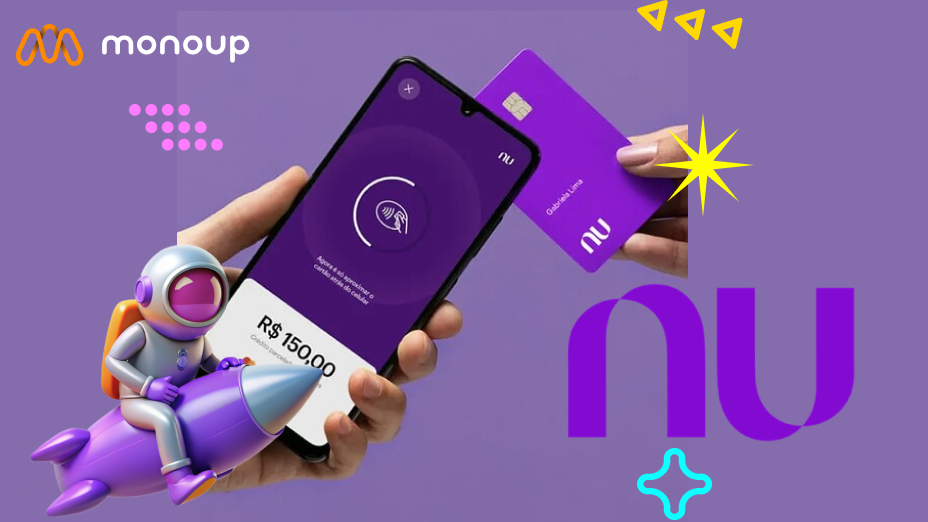
One of the most relevant services from Nu bank for the Latin American market is Tap to Pay, which allows the use of a mobile phone with their application as a POS terminal. A similar service was recently introduced by Singaporean payment system FOMO Pay. So where are personal finances going?
Cryptocurrency, a POS-terminal in a phone, investments, and banking in one package. Isn't that too much? No, not at all, as the clients say.
More news and payment content you will find at Mono Talks pages.


